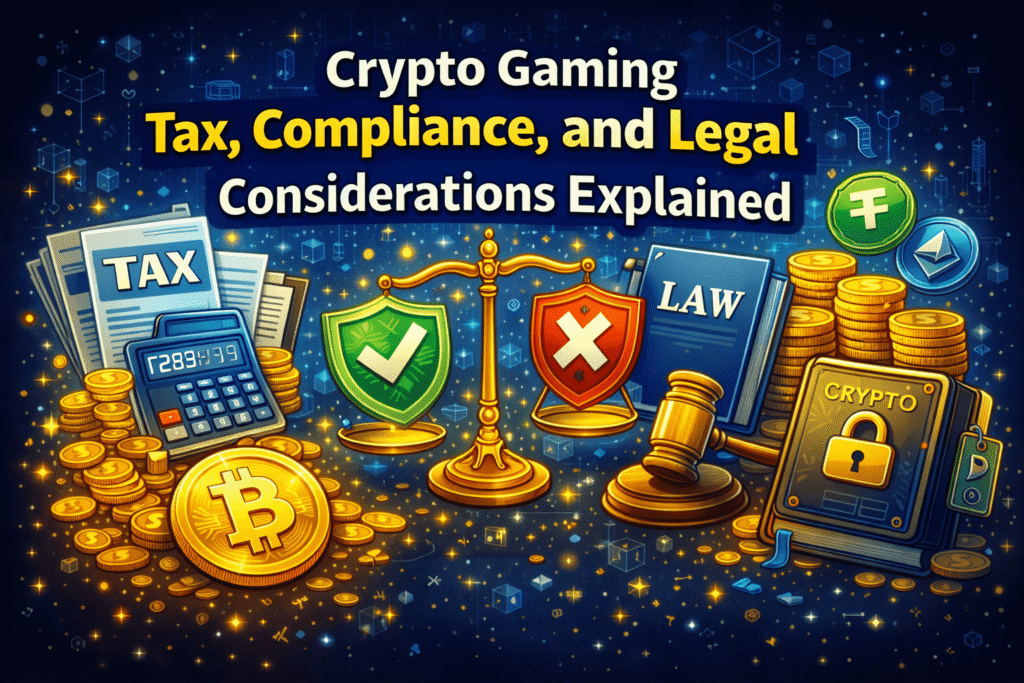
As cryptocurrency continues to play a larger role in online gaming, more players are exploring crypto-based casinos, games, and betting platforms. While crypto gaming offers benefits such as fast transactions, privacy, and global access, it also introduces important questions around crypto gaming tax, compliance, and legal responsibilities.
This article provides general information to help players understand how taxes, regulations, and compliance considerations may apply to crypto gaming. It is intended for educational purposes only and does not constitute legal or tax advice.
Understanding Crypto Gaming Tax
Crypto gaming tax refers to the potential tax obligations that may arise when using cryptocurrency for online gaming activities. In many jurisdictions, cryptocurrency is treated as a digital asset or property rather than traditional currency, which can affect how gains and losses are taxed.
When players deposit, wager, or withdraw cryptocurrency, these actions may trigger taxable events depending on local laws.
When Crypto Gaming May Trigger Tax Obligations
Common situations where crypto gaming tax may apply include:
- Converting cryptocurrency to fiat currency after gaming
- Realizing gains from crypto withdrawals
- Using cryptocurrency that has increased in value since acquisition
Some jurisdictions may consider gaming winnings taxable income, while others may focus on capital gains from crypto transactions. The treatment varies widely by country.
How Cryptocurrency Is Typically Classified for Tax Purposes
In many regions, tax authorities classify cryptocurrency as:
- Property
- A digital asset
- A form of virtual currency
This classification means that any increase or decrease in value between the time cryptocurrency is acquired and when it is used or withdrawn may be subject to capital gains or losses.
Understanding how your local authority defines cryptocurrency is essential when evaluating crypto gaming tax obligations.
Record-Keeping and Reporting Responsibilities
One of the most overlooked aspects of crypto gaming tax compliance is record-keeping. Because blockchain transactions are transparent but irreversible, players are generally responsible for tracking their own activity.
Best Practices for Record-Keeping
- Keep records of deposits, withdrawals, and wallet addresses
- Track dates, amounts, and transaction values in local currency
- Save transaction IDs and confirmation details
Accurate records can help simplify tax reporting and reduce the risk of errors or disputes.
Crypto Gaming Compliance: What Players Should Know
Crypto gaming compliance refers to how platforms and users align with applicable laws, regulations, and responsible gaming standards. While platforms may implement compliance measures, players also have responsibilities.
Platform-Level Compliance
Reputable crypto gaming platforms often demonstrate compliance by:
- Publishing clear terms and conditions
- Maintaining privacy and data protection policies
- Promoting responsible gaming practices
- Working with verified game providers
These measures are designed to create a safer and more transparent gaming environment.
Player Responsibilities in Crypto Gaming Compliance
Players are generally expected to:
- Comply with local laws and regulations
- Provide accurate information when required
- Use platforms that operate transparently
Failure to follow local regulations may result in penalties, account restrictions, or other legal consequences.
Legal Considerations in Crypto Gaming
Crypto gaming legality varies significantly by jurisdiction. Some regions permit crypto gaming under existing gambling laws, while others restrict or regulate it more heavily.
Key Legal Factors to Consider
- Whether online gaming is legal in your jurisdiction
- Whether crypto payments are permitted for gaming
- Age and identity requirements
- Licensing status of gaming platforms
Because regulations evolve rapidly, players should stay informed about current legal frameworks in their location.
Cross-Border and International Considerations
One of the advantages of crypto gaming is global accessibility, but this also creates legal complexity. Playing on international platforms does not exempt users from local laws.
Important Points for Global Players
- Local tax laws may still apply regardless of platform location
- International platforms may follow different compliance standards
- Dispute resolution may be more complex across borders
Understanding these factors helps reduce legal and financial risks.
Responsible Gaming and Regulatory Awareness
Responsible gaming is a core component of compliance. Many regulatory bodies emphasize player protection, transparency, and informed participation.
Responsible Gaming Principles
- Set spending and time limits
- Avoid treating gaming as a source of income
- Seek help if gaming habits become problematic
Responsible gaming practices support both personal well-being and regulatory alignment.
Common Misconceptions About Crypto Gaming Tax and Legal Issues
“Crypto Gaming Is Completely Anonymous”
While crypto offers privacy, blockchain transactions are traceable. Tax authorities may still require reporting.
“Small Amounts Don’t Matter”
Even small transactions may be taxable depending on local thresholds.
“Using Offshore Platforms Avoids Taxes”
Using international platforms does not eliminate local tax or legal obligations.
Understanding these misconceptions is crucial for compliant participation.
Practical Tips for Managing Crypto Gaming Tax and Compliance
- Educate yourself on local crypto tax rules
- Keep detailed transaction records
- Use reputable platforms with clear compliance policies
- Consider consulting a qualified tax or legal professional
Taking a proactive approach can help reduce uncertainty and risk.
The Future of Crypto Gaming Regulation
As crypto gaming continues to grow, regulatory frameworks are expected to become more defined. Governments and regulators are increasingly focusing on:
- Digital asset taxation
- Consumer protection
- Anti-money laundering (AML) standards
Staying informed about regulatory developments will become increasingly important for both platforms and players.
Conclusion
Crypto gaming tax, compliance, and legal considerations are essential topics for anyone participating in crypto-based gaming. While crypto gaming offers speed, flexibility, and global access, it also requires greater awareness and responsibility from players.
By understanding how crypto gaming tax may apply, maintaining proper records, choosing compliant platforms, and staying informed about legal requirements, players can engage in crypto gaming more confidently and responsibly.