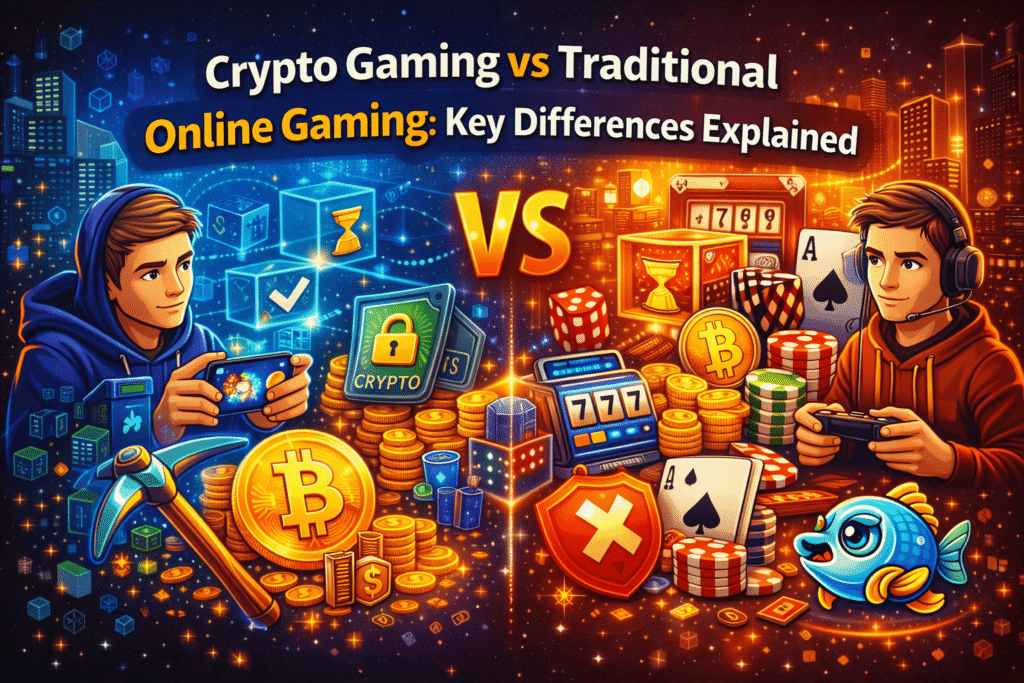
The online gaming industry has evolved rapidly over the past decade. One of the most significant developments is the rise of crypto gaming, which uses cryptocurrency and blockchain technology instead of traditional payment systems. While traditional online gaming remains popular, crypto gaming offers a different approach that appeals to a growing number of players worldwide.
This article provides a clear comparison of crypto gaming vs traditional online gaming, explaining the key differences in payments, transparency, security, player control, and overall experience. Understanding these differences can help players make informed decisions about which option best suits their preferences and needs.
What Is Traditional Online Gaming?
Traditional online gaming refers to platforms that use fiat currencies such as USD, EUR, or local currencies for deposits and withdrawals. These platforms typically rely on banks, credit cards, and third-party payment processors.
Key characteristics of traditional online gaming include:
- Centralized account management
- Bank-based or card-based payments
- Platform-controlled game logic and balances
- Familiar user experience for mainstream players
Traditional online gaming is often regulated under established gambling frameworks in many regions.
What Is Crypto Gaming?
Crypto gaming uses cryptocurrencies such as Bitcoin (BTC), Ethereum (ETH), or stablecoins like USDT for transactions. Payments are processed on blockchain networks rather than through traditional banking systems.
Key characteristics of crypto gaming include:
- Blockchain-based deposits and withdrawals
- Wallet-to-platform transactions
- Greater player control over funds
- Increased transparency through blockchain records
Crypto gaming is closely tied to blockchain technology and digital asset ecosystems.
Payment Methods: Crypto vs Fiat
Traditional Online Gaming Payments
Traditional platforms rely on:
- Credit and debit cards
- Bank transfers
- E-wallets
These methods are familiar but may involve processing delays, geographic restrictions, or additional fees.
Crypto Gaming Payments
Crypto gaming platforms use:
- Bitcoin, Ethereum, and stablecoins
- Direct wallet transfers
- Blockchain confirmations
Crypto payments are often faster and borderless, although network fees and confirmation times may vary.
Key Difference: Crypto gaming reduces reliance on intermediaries, while traditional gaming depends heavily on banks and payment processors.
Transaction Speed and Accessibility
Traditional online gaming withdrawals can take hours or days due to banking procedures. In contrast, crypto gaming transactions are often processed more quickly once confirmed on the blockchain.
Crypto gaming also offers greater accessibility for international players, as it is not limited by local banking infrastructure.
Transparency and Trust
Traditional Online Gaming
Traditional platforms operate centralized systems. Players must trust the platform to:
- Generate fair outcomes
- Process payments accurately
- Maintain internal records
Although many platforms are regulated and audited, transparency is largely based on trust in the operator.
Crypto Gaming
Crypto gaming introduces blockchain transparency:
- Transactions are publicly verifiable
- Game mechanisms may support provably fair systems
- Records are immutable and auditable
Key Difference: Crypto gaming enables independent verification, while traditional gaming relies on platform assurances and regulatory oversight.
Fairness and Game Integrity
Both crypto gaming and traditional online gaming aim to provide fair gameplay, but they use different approaches.
- Traditional platforms rely on certified Random Number Generators (RNGs) and regulatory audits
- Crypto platforms may use blockchain-based or provably fair systems that allow players to verify outcomes
Crypto gaming places more emphasis on technical transparency, while traditional gaming emphasizes regulatory compliance.
Security and Data Protection
Traditional Online Gaming Security
- Centralized data storage
- User identity verification
- Compliance with data protection regulations
While secure, centralized systems can be vulnerable to data breaches if compromised.
Crypto Gaming Security
- Wallet-based fund management
- Cryptographic transaction security
- Reduced need to share sensitive banking data
Crypto gaming shifts more responsibility to the player, making wallet security a critical factor.
Player Control and Responsibility
One of the biggest differences in crypto gaming vs traditional online gaming is player control.
- Traditional gaming platforms manage user balances internally
- Crypto gaming allows players to control funds directly through their wallets
This increased control also means greater responsibility. Mistakes in crypto transactions are often irreversible, while traditional systems may offer dispute resolution options.
Privacy Considerations
Traditional online gaming often requires personal and financial information for payments and verification. Crypto gaming typically requires less direct sharing of banking data, offering a higher level of financial privacy.
However, privacy does not eliminate legal or tax responsibilities in either model.
Regulation and Compliance
Traditional online gaming operates within established regulatory frameworks in many regions. Crypto gaming regulations vary widely by jurisdiction and are still evolving.
Players should:
- Understand local laws
- Choose platforms with clear compliance policies
- Stay informed about regulatory changes
Regulatory clarity remains one of the main differences between the two models.
User Experience and Accessibility
Traditional online gaming offers a familiar experience that appeals to mainstream users. Crypto gaming may require basic knowledge of wallets and blockchain transactions, which can be a barrier for beginners.
However, as crypto adoption grows, platforms are improving usability and onboarding processes.
Which Is Better: Crypto Gaming or Traditional Online Gaming?
There is no universal answer. The choice depends on player preferences:
- Choose traditional online gaming if you value familiarity, regulatory clarity, and conventional payment methods.
- Choose crypto gaming if you prefer faster transactions, greater transparency, and control over digital assets.
Both models continue to coexist and evolve.
The Future of Online Gaming
As blockchain technology matures, crypto gaming is likely to influence traditional platforms, especially in areas such as transparency and payment efficiency. Hybrid models combining fiat and crypto payments are already emerging.
The future of online gaming may include elements from both systems.
Conclusion
Crypto gaming vs traditional online gaming represents a comparison between two different approaches to digital entertainment. Traditional online gaming emphasizes regulatory structure and familiarity, while crypto gaming focuses on transparency, decentralization, and player control.
Understanding the key differences allows players to choose the experience that best aligns with their needs, risk tolerance, and technical comfort level.